All Threes Dominoes, scored in threes
All Fives' sibling - Score when the open ends add up to multiples of three.How to Play All Threes Dominoes
In a nutshell: All Fives' sibling - Score when the open ends add up to multiples of three. You play with a double-six set (28 tiles), it's rated a familiar twist, and scoring discipline beats luck over a full game.
All Threes takes the machinery of All Fives and retunes it: every play that leaves the open ends totalling a multiple of three scores that many points, so 3, 6, 9, 12 and beyond all pay. Multiples of three come up more often than multiples of five, which makes the scoring feel busier - Smaller payouts, but more of them, and fewer turns where nothing is on offer. All the familiar structure is here: seven tiles each from the double-six set, the first double as the spinner with arms that open once its main line is covered, doubles counting both halves at an open end, and the hand winner collecting the loser's pips rounded to the nearest three. The race runs to 100 points, and players who already know All Fives will find a completely fresh set of key tiles to fight over.
All Threes at a glance
| Goal | Race to 100 points by making the open ends of the layout total a multiple of three, scoring that total each time. |
|---|---|
| Set used | Double-six - 28 tiles in play |
| Players | 2 - You vs the computer, or a friend online |
| Difficulty | A familiar twist |
| Chance of winning | Scoring discipline beats luck over a full game |
| Family | Scoring Games |
Step by step
Goal
Race to 100 points by making the open ends of the layout total a multiple of three, scoring that total each time.
The deal
Both players draw seven tiles from the double-six set; the rest wait in the boneyard. Draw until you can play whenever you are stuck.
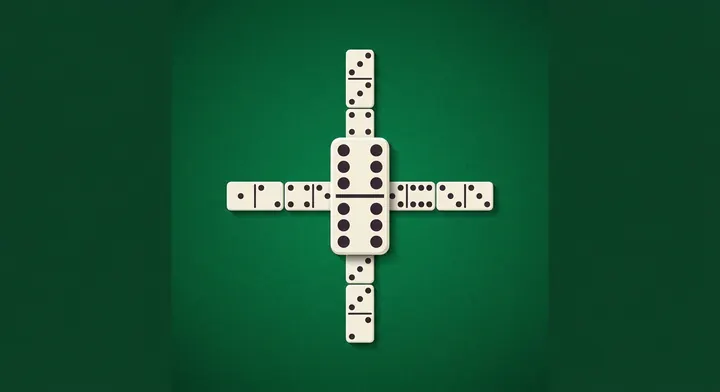
The spinner
The first double played becomes the spinner. After both main-line sides are covered, its two side arms open, giving up to four ends to count.
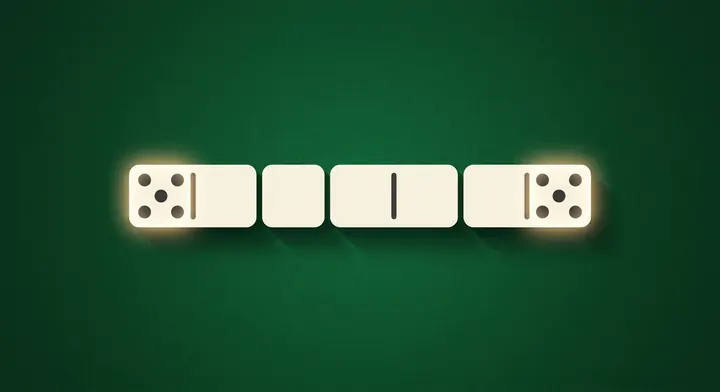
Scoring
If the open ends total 3, 6, 9, 12 or any other multiple of three after your play, you score that total. A double at an end counts both its halves.
Going out
Playing your last tile wins the hand and adds your opponent's remaining pips, rounded to the nearest three. A blocked hand goes to the lighter holding.
History of All Threes
The counting games are a nineteenth-century development in the long history of dominoes. Once the European game - Itself an eighteenth-century Italian and French reworking of far older Chinese tile play - Had settled into its familiar block and draw forms, players in Britain and America began scoring the layout itself, awarding points whenever the open ends reached agreeable totals. Fives came first in popularity, but threes followed close behind.
All Threes appears in game collections alongside All Fives as a sibling rather than an afterthought: the same seven-tile hands, spinner and draw rules, with the single change of divisor. Compilers of Victorian and early twentieth-century rulebooks generally presented Fives, Threes and the combined Fives-and-Threes as one family, and pub and parlor players moved freely between them.
Today All Threes is the connoisseur's counting game - Less played than its famous sibling but kept alive by enthusiasts who enjoy how thoroughly one small rule change reshuffles the deck. Because multiples of three land more often than multiples of five, the game has its own tempo: busier scoring, tighter margins, and a fresh hierarchy of tiles that rewards players willing to recalculate everything they learned in All Fives.
How to Win All Threes: Strategy
💡 Top tip: Relearn your openers - In All Threes the 6-6 leads for twelve, the 6-3 and 5-4 for nine, and the 3-3 for six: a different set of scoring tiles from All Fives.
Winning tips, in order of importance
- Take the small scores: multiples of three arrive more often than multiples of five, and a steady stream of threes and sixes outruns a patient hunt for one big play.
- Count every end before playing - With up to four arms off the spinner, the total changes faster than it looks.
- Shed heavy tiles early; the hand winner rounds your leftover pips to the nearest three, and that tight rounding forgives almost nothing.
- Open the spinner's arms when you hold the tiles to score on them, not just because you can.
- Watch your opponent's draws to learn which end values they cannot cover, then keep the ends parked there.
- When you cannot make a multiple of three, leave a total that needs the tiles you are holding - Denial is half the scoring game.
Advanced tactics for All Threes
- Think modulo three: a total of 10 needs a change of minus one or plus two to score, so scan your hand for tiles whose halves differ by exactly those amounts.
- Know your remainder-keepers: the 3-0, 4-1, 5-2, 6-3 and 6-0 swap an end without changing the total's remainder, letting you hold a favorable count for another turn.
- Doubles at an end count both halves, and the 6-6 and 3-3 are multiples of three all by themselves - Plan their placement as scoring plays in their own right.
- The nearest-three rounding forgives almost nothing - Two leftover pips still round up to three - So when you are ahead in a hand, go out fast rather than milking small table scores.
- The first tile on each spinner arm creates a new end of your choosing; save arm openings for the moment the new value tips the total onto a multiple of three.
- Track the boneyard as it shrinks: fourteen tiles start buried, and each opponent draw hands you a map of the gaps in their hand.
- In the race to 100, weight the endgame: a modest table score that also empties your hand beats a bigger one that leaves you holding heavy pips.
Common All Threes mistakes to avoid
- Counting in fives out of habit - the board pays on multiples of three here, so retrain your eye before you throw points away.
- Ignoring the 6-3 and 3-3 - tiles built from threes and sixes create scoring ends constantly and are this game's real currency.
- Opening the spinner arms carelessly - each new arm shifts the total by its end value, and a careless arm gifts your opponent a six or nine.
- Forgetting the round-off bonus - hands are scored to the nearest three when someone dominoes, so going out with 2 pips against 11 is a real swing.
All Threes Variations
All Fives (Muggins)
The famous sibling: identical structure, but the ends must total a multiple of five. Bigger single scores, rarer scoring turns, and a different roster of key tiles.
Fives and Threes
Scores both divisors at once - A point per five and per three in the total - With nine-tile hands, no spinner and a race to 61: the British pub refinement of the counting idea.
Sniff
An American All Fives relative with looser spinner rules; running it on threes instead of fives is a common house variation among counting-game enthusiasts.
Double-nine All Threes
A 55-tile set pushes end totals higher, making multiples of three both easier to hit and bigger when they land - Well suited to three or four players.
Target and rounding tweaks
Houses vary the race - 50 for a short game, 150 for a long one - And some skip the rounding of hand pips to the nearest three, scoring exact counts instead.
All Threes FAQ
How do you score in All Threes?
After your play, total all the open ends. If the sum is a multiple of three - 3, 6, 9, 12 and so on - You score that total immediately. The hand winner also collects the loser's remaining pips, rounded to the nearest three.
Is All Threes just All Fives with a different number?
Structurally yes: same seven-tile hands, same spinner, same draw-when-stuck rule, same race format. But changing the divisor reshuffles the value of every tile - The scoring plays, the safe plays and the best openers are all different, so it rewards fresh calculation rather than recycled habits.
What is the spinner in All Threes?
The first double played becomes the spinner. It counts both halves while it sits at an open end, and once both sides of the main line through it are covered, tiles may branch onto its two side arms, creating up to four open ends to count.
What is the best opening tile in All Threes?
The 6-6 opens with a count of twelve, the biggest available, since a double counts both halves. The 6-3 and 5-4 open for nine, and the 3-3 and 4-2 for six. The 5-5's count of ten - A star opener in All Fives - Scores nothing at all here.
Why do scores feel more frequent than in All Fives?
Across the range of possible end totals, more numbers divide by three than by five, so scoring plays come up more often. The flip side is that individual scores are smaller on average, making All Threes a game of steady accumulation rather than big single strikes.
What happens if I can't play?
You draw from the boneyard until you find a playable tile, passing only once the boneyard is empty. Every forced draw both fattens your hand and reveals which end values you lacked, so it hurts twice.
How does a hand end in All Threes?
A player goes out by placing their final tile, or the game blocks with the boneyard empty and no legal moves left. The winner - First out, or lighter at a block - Scores the opponent's leftover pips rounded to the nearest three.
How does rounding to the nearest three work?
Leftover pips round to the closest multiple of three: 7 becomes 6, 8 becomes 9, and 4 becomes 3. Because the gaps between multiples of three are so small, almost every hand won yields something close to the true pip count.
Do doubles count both halves in All Threes?
Yes, a double at an open end contributes both halves to the total, exactly as in All Fives. The 6-6 adds twelve and the 3-3 adds six - Both multiples of three in their own right, which makes those two doubles the game's signature scoring tiles.
What score do you play to?
The traditional race is to 100 points. Since table scores arrive in threes, sixes and nines rather than fives and tens, games run to a similar length as All Fives despite the smaller average score per play.
Is All Threes a traditional game or a modern invention?
It is a traditional member of the counting-game family that grew up alongside All Fives in the nineteenth and early twentieth centuries. Game collections often describe Fives, Threes and the combined Fives-and-Threes together, and All Threes survives today mainly among scoring-dominoes enthusiasts.
Which tiles keep an end's remainder the same?
Non-double tiles whose halves differ by three or six - The 3-0, 4-1, 5-2, 6-3 and 6-0 - Replace an end without changing what the total needs. A double at an end counts both halves, effectively adding its own pip value to the count, so the 0-0, 3-3 and 6-6 also preserve the remainder while other doubles shift it.
Still have a question about All Threes Dominoes? Browse the full dominoes FAQ, look up a term like scoring games or a familiar twist in the dominoes glossary, or compare All Threes with the other games in the rules for every dominoes game.
Last updated .