Bergen Dominoes, where matching ends score
Score by making both open ends match - Two points a pair, three with a double.How to Play Bergen Dominoes
In a nutshell: Score by making both open ends match - Two points a pair, three with a double. You play with a double-six set (28 tiles), it's rated gentle & tactical, and pattern matching keeps most games close.
Bergen is the gentlest of the scoring domino games, and one of the most elegant. Each player takes just six tiles, and the object is symmetry: whenever your play leaves both open ends of the line showing the same value, you score two points for the double-header - Or three for a triple-header, when one of those matching ends is a double. Going out first earns one more point, and the race runs to 15. The small hands and modest scores keep every game close, and the draw rule - Take from the boneyard until you can play - Means you are never simply stuck. What looks like a light family game turns out to reward real pattern play: engineering matched ends for yourself while denying them to your opponent takes more foresight than the friendly scoreline suggests.
Bergen at a glance
| Goal | Be the first to 15 points, scored by making the two open ends of the line match each other. |
|---|---|
| Set used | Double-six - 28 tiles in play |
| Players | 2 - You vs the computer, or a friend online |
| Difficulty | Gentle & tactical |
| Chance of winning | Pattern matching keeps most games close |
| Family | Scoring Games |
Step by step
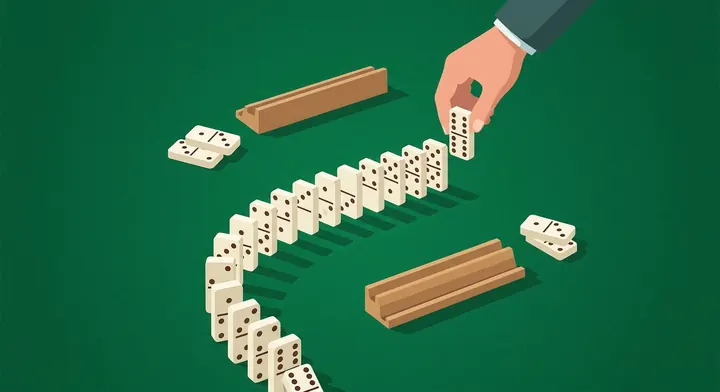
Goal
Be the first to 15 points, scored by making the two open ends of the line match each other.
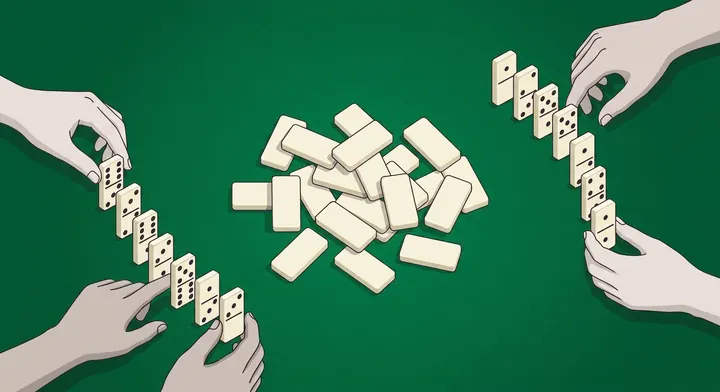
The deal
Each player draws six tiles from the double-six set; the remaining sixteen form a generous boneyard.
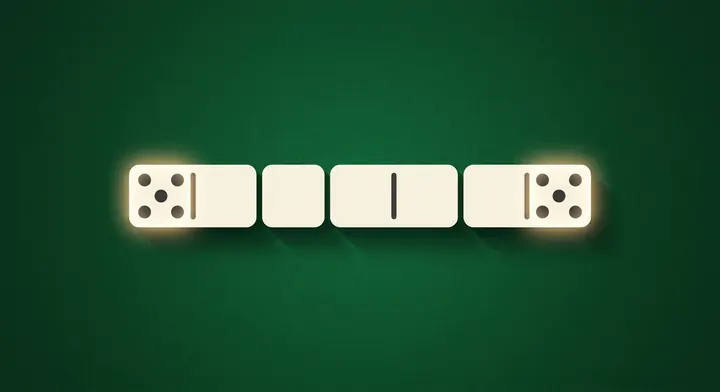
Scoring
When your play leaves both open ends showing the same value you score two points for a double-header - Or three for a triple-header, when one of the matching ends is a double.
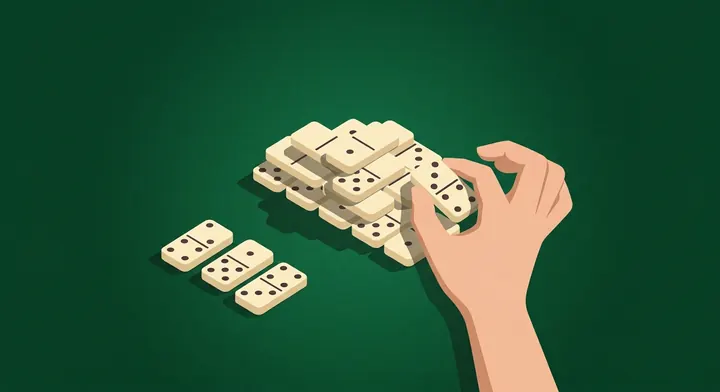
The boneyard
If you cannot play, draw from the boneyard until you can; you pass only when it is empty.
Going out
Playing your last tile scores one point and ends the hand. If the line blocks, the lighter hand takes the point, and fresh hands are dealt until someone reaches 15.
History of Bergen
Bergen belongs to the wave of scoring variants that spread through Europe in the nineteenth century, after the plain block and draw games had become household fixtures. Where the British counting games rewarded arithmetic on the ends, Bergen rewarded symmetry - Matching the two ends of the line - Which gave it a character all its own: gentler sums, quicker recognition, and a constant tug-of-war over the shape of the layout.
The name is usually traced to Bergen, the Norwegian port city, and the game has a long-standing following in Scandinavia and northern Europe, though - As with many folk games - No document pins down where or when it was first played. It enters the written record through game compendiums that describe it alongside Muggins and Matador as one of the established alternatives to the basic game.
Bergen's survival owes much to its balance. Six-tile hands and a deep boneyard keep hands short and scores close, the double-header rule is teachable in one sentence, and the triple-header gives doubles a role found in no other variant. It remains a favorite recommendation for families, and a quiet lesson in how a single scoring idea can transform the feel of the same twenty-eight tiles.
How to Win Bergen: Strategy
💡 Top tip: Play for the pair: before anything else, check whether any tile in your hand leaves both ends showing the same number - Two points on the table beat almost any quiet play.
Winning tips, in order of importance
- Doubles are upgrade tiles: a matched pair of ends with a double at one of them pays three, so hold a double until the other end already shows its number.
- Deny as well as score: when the ends match and you must break them, pick the change that leaves the new pair hardest for your opponent to rebuild.
- Keep your hand flexible - With only six tiles, holding two suits deep beats holding four suits thin.
- Drawing is not free: every boneyard tile pushes your one-point going-out bonus further away, so avoid plays that are likely to strand you next turn.
- Track the score, not just the board: at 13 or 14 points a single double-header ends the game, and defense becomes everything.
- Watch drawn tiles: an opponent who digs deep in the boneyard has just told you the two numbers they could not play.
Advanced tactics for Bergen
- Count each suit's seven tiles: rebuilding a matched pair needs the right connector, and knowing three fours are already down tells you whether the 4-4 pair can ever be remade.
- Sequence your scores: the tile that scores two now may be the same tile that scores three later, once the matching double comes out - Read the order before you spend it.
- Leading a double leaves the ends matched from move one, but it also hands your opponent a known target; weigh the immediate score against the information you give away.
- Never forget the going-out point: shedding tiles at pace is itself a scoring strategy, worth a point every hand you finish first.
- When your opponent sits at 13 or 14, avoid any play that leaves the ends one tile from matching - Even at the cost of your own score.
- Use the boneyard as a weapon: shifting an end to a number your opponent has shown they lack sends them digging, bloating their hand and delaying their out.
- Pip weight still matters: blocked hands go to the lighter holding, so shed your heavy tiles once the boneyard runs low and a lock starts to threaten.
Common Bergen mistakes to avoid
- Breaking your own pair - if both ends already match, any careless play throws away the position you just built, so plan the follow-up first.
- Wasting doubles on non-scoring plays - a double landing on a matching end scores 3 instead of 2, so save them for the pair.
- Forgetting to watch the other end - Bergen is about BOTH ends, and beginners fixate on the end they just played.
- Drawing when a quiet play exists - every trip to the boneyard adds pips to your hand in a game where going out is worth a point.
Bergen Variations
Three- and four-player Bergen
Bergen scales comfortably to a full table: hands stay small, the boneyard shrinks, and matched ends become harder to defend with more hands feeding the line.
Race to ten
A shorter target for quicker games; with double-headers worth two, a race to ten can swing on a single well-timed triple-header.
Double-nine Bergen
The larger 55-tile set widens the range of matches and suits bigger groups, while the double-header and triple-header scores stay the same.
Blocked-hand scoring
House rules differ on a locked hand - Most give the lighter hand the point, some award two - So traditional tables settle it before the first tile.
Draw Dominoes
The chassis Bergen is built on: the same matching and drawing rules with no scoring for matched ends - Worth knowing as the baseline the Bergen twist transforms.
Bergen FAQ
How do you score points in Bergen?
You score when your play leaves both open ends of the line showing the same value: two points for the plain match, called a double-header, or three points when one of the matching ends is a double, called a triple-header. Going out first adds one more point, and the first player to 15 wins.
What is a triple-header?
A triple-header is a matched pair of ends where one end is a double - For example the 4-4 sitting at one end while the other end also shows a four. It scores three points instead of the usual two, which is why Bergen players hold their doubles for exactly the right moment.
Why do you only get six tiles?
Bergen deals six tiles to each player, leaving a deep boneyard of sixteen. Small hands keep scores tight and make the draw rule matter: a player who cannot play may dig several tiles deep, and every extra tile delays the going-out point.
What happens if I can't play in Bergen?
You draw from the boneyard until you find a playable tile, and you pass only when the boneyard is empty. Drawing is doubly painful in Bergen because each added tile pushes your one-point going-out bonus further out of reach.
How does a hand of Bergen end?
Someone plays their last tile and scores the going-out point, or the game blocks with the boneyard empty and no legal plays left. A blocked hand goes to the lighter pip count. Hands are dealt until one player reaches 15 points.
Do doubles open extra arms in Bergen?
No, there is no spinner. Doubles sit in the line like any other tile; their special role is in scoring, where a double at one of two matching ends upgrades a two-point double-header into a three-point triple-header.
Is Bergen a good game for beginners?
One of the best. The matching rules are ordinary dominoes and the scoring - Make the ends match - Is visible at a glance. Yet the game scales up nicely: engineering matches while denying them to your opponent gives experienced players plenty to work with.
Where does the name Bergen come from?
The most common account links it to Bergen, the Norwegian port city, and the game has long been popular in northern Europe, but firm documentation of the naming is elusive. Like many traditional domino variants it spread through play first and reached the rulebooks with its name already attached.
What is the best opening move in Bergen?
Opening with a double leaves both ends matched from the very first tile, and most rule sets treat that as a scoring double-header. If you hold no double, open from your longest suit so you can keep feeding matches on your own terms.
Can both players score in the same exchange?
Each play is scored on its own: if your tile leaves the ends matching you score, and if your opponent's reply rebuilds a match they score. Positions where every safe play hands the other player a match are Bergen's signature tension.
How many points do you need to win?
The race is to 15 points. With double-headers worth two, triple-headers three and the going-out point worth one, a typical game runs a handful of hands - Long enough for skill to tell, short enough to stay light.
Does pip count matter in Bergen?
Only when a hand blocks: with the boneyard empty and no moves left, the lighter hand wins. It is a rarer ending than in Block dominoes because drawing keeps the game moving, but shedding heavy tiles late is still wise.
Still have a question about Bergen Dominoes? Browse the full dominoes FAQ, look up a term like scoring games or gentle & tactical in the dominoes glossary, or compare Bergen with the other games in the rules for every dominoes game.
Last updated .