Dominoes Rules for all eight games
Dominoes is a family of tile games built around one satisfying idea: take 28 shuffled tiles and join them into a single matching chain. Most variants deal each player a hand of tiles, leave the rest face down in the boneyard (the draw pile), and ask you to add tiles to the line of play - matching your pips to an open end on the table. What changes between games is everything else: whether you draw or pass when stuck, whether ends must match or add to seven, whether doubles spin the line in new directions, and how points are scored.
This page collects the rules for every game on Dominoes.now. Each section covers the goal, the legal plays, and the details that trip up new players - with a link to jump straight into a game. If you're brand new, start with All Fives (the classic), warm up with Draw, or try Matador if you prefer a twist where the ends add to seven instead of matching.
💡 New to dominoes? Every game below shares the same core idea - match your tiles to the open ends of the line. Learn one and the rest come quickly.
Every dominoes game at a glance
Skim the whole family first, then jump to the full rules for any game below.
| Game | Connect rule | Tiles | Difficulty |
|---|---|---|---|
| All Fives | Match ends + spinner | 28 | Easy to learn, deep to master |
| Draw | Match ends | 28 | The beginner's game |
| Block | Match ends | 28 | Simple & pure |
| All Threes | Match ends + spinner | 28 | A familiar twist |
| 5s & 3s | Match ends; no spinner | 28 | The pub classic |
| Bergen | Match ends | 28 | Gentle & tactical |
| Matador | Ends add to 7 | 28 | Nothing matches - It adds |
| Cross | Match ends + cross | 28 | Four arms, more choices |
Scoring Games
All Fives Dominoes
Double-six set (28 tiles) · Easy to learn, deep to master · Skill and pip counting shift the odds well past 50%
All Fives is the most popular scoring variant of dominoes - The one tournament players often just call Muggins. You and your opponent each draw seven tiles from the double-six set, and any play that leaves the open ends totalling a multiple of five scores that total on the spot: 5, 10, 15 or even 20 points at once. The first double becomes the spinner, sprouting four arms once its main line is covered, which multiplies the ends you must count. Winning a hand pays too: go out first and you collect your opponent's leftover pips, rounded to the nearest five. Because points arrive from both the table and the hand, All Fives layers live arithmetic on top of the familiar matching game, and the running race to 100, 150 or 250 rewards players who can read the ends a full move ahead.
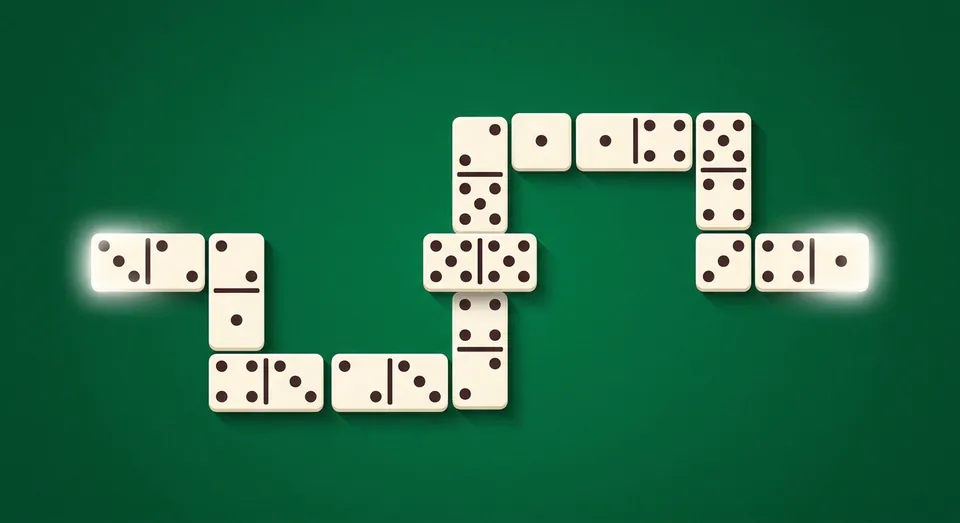
- Goal. Be the first to the target score - 100, 150 or 250 points - Earned by making the open ends total a multiple of five and by winning hands.
- The deal. Each player draws seven tiles from the shuffled double-six set; the remaining fourteen form the boneyard. If you cannot play, draw until you can - You pass only once the boneyard is empty.
- The spinner. The first double played is the spinner. Once both sides of the main line through it are covered, tiles may branch onto its two side arms, opening up to four scoring ends.
- Scoring. After any play where the open ends total a multiple of five, you score that total. A double at an open end counts both halves, so the 5-5 contributes ten.
- Going out. Play your last tile to win the hand and score your opponent's remaining pips rounded to the nearest five. If the game blocks, the lighter hand wins and scores the same way.
All Threes Dominoes
Double-six set (28 tiles) · A familiar twist · Scoring discipline beats luck over a full game
All Threes takes the machinery of All Fives and retunes it: every play that leaves the open ends totalling a multiple of three scores that many points, so 3, 6, 9, 12 and beyond all pay. Multiples of three come up more often than multiples of five, which makes the scoring feel busier - Smaller payouts, but more of them, and fewer turns where nothing is on offer. All the familiar structure is here: seven tiles each from the double-six set, the first double as the spinner with arms that open once its main line is covered, doubles counting both halves at an open end, and the hand winner collecting the loser's pips rounded to the nearest three. The race runs to 100 points, and players who already know All Fives will find a completely fresh set of key tiles to fight over.
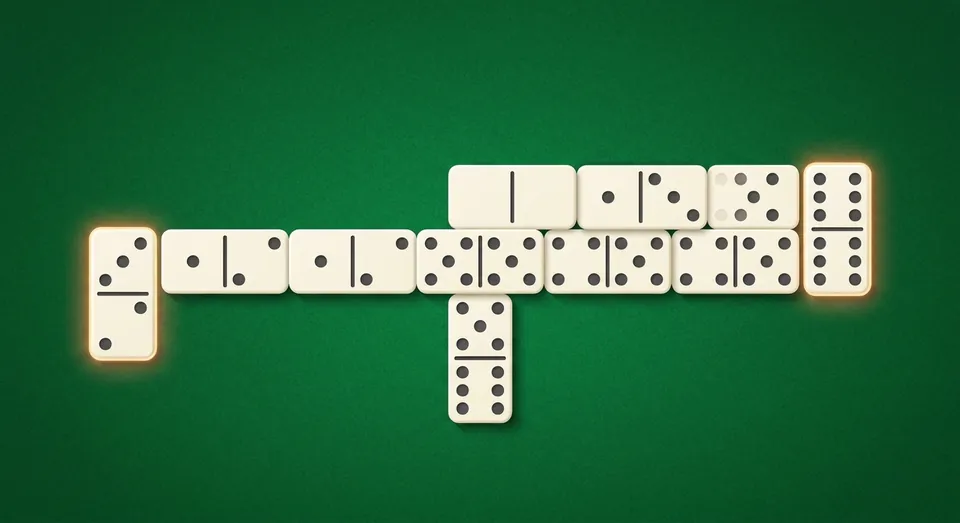
- Goal. Race to 100 points by making the open ends of the layout total a multiple of three, scoring that total each time.
- The deal. Both players draw seven tiles from the double-six set; the rest wait in the boneyard. Draw until you can play whenever you are stuck.
- The spinner. The first double played becomes the spinner. After both main-line sides are covered, its two side arms open, giving up to four ends to count.
- Scoring. If the open ends total 3, 6, 9, 12 or any other multiple of three after your play, you score that total. A double at an end counts both its halves.
- Going out. Playing your last tile wins the hand and adds your opponent's remaining pips, rounded to the nearest three. A blocked hand goes to the lighter holding.
Fives and Threes
Double-six set (28 tiles) · The pub classic · The better counter wins most races to 61
Fives and Threes is the great British pub game - The variant played in leagues across northern England, traditionally scored on a cribbage board. Every play is measured against both targets at once: if the two open ends total a multiple of five you score a point per five, a multiple of three pays a point per three, and the magic total of 15 pays both at once for eight points, the game's famous maximum. Each player takes nine tiles, ten stay sleeping face down, and there is no drawing and no spinner - Just a single line, a knock when you are stuck, and a race to 61 points across as many hands as it takes. Because points come in ones, twos and threes, every single placement matters, and the best players calculate two moves deep before letting a tile touch the table.
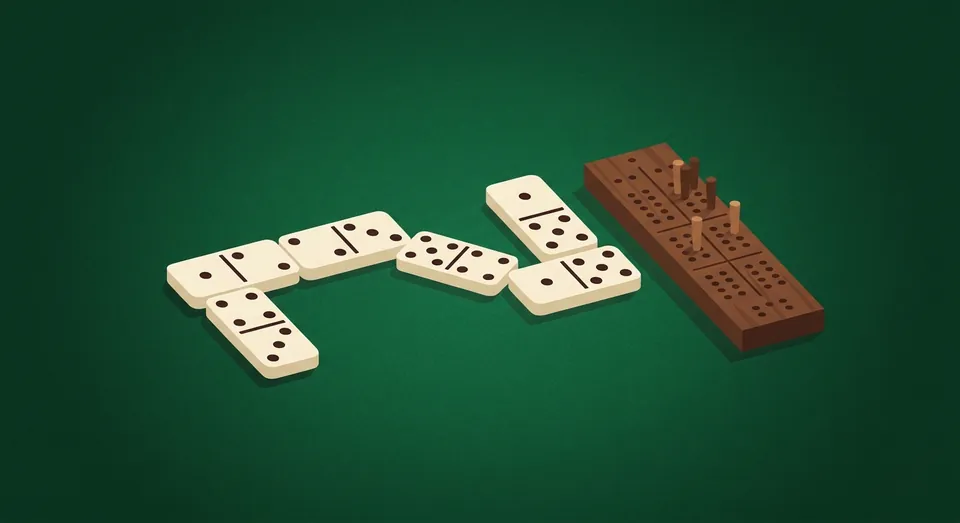
- Goal. Be the first to reach 61 points, scored across as many hands as it takes, by making the two open ends divide by five, by three, or by both.
- The deal. Each player takes nine tiles from the double-six set; the remaining ten sleep face down and are never drawn.
- Matching ends. There is one line and no spinner. Tiles match end to end exactly as in Block, and if you cannot play you knock and pass.
- Scoring. Add the two open ends: a multiple of five scores one point per five, a multiple of three one point per three. Fifteen divides by both and pays eight - The maximum. A double at an end counts both halves.
- Blocked games. A hand ends when someone plays their last tile or when both players knock in succession; then a fresh hand is dealt and the race to 61 continues.
Bergen Dominoes
Double-six set (28 tiles) · Gentle & tactical · Pattern matching keeps most games close
Bergen is the gentlest of the scoring domino games, and one of the most elegant. Each player takes just six tiles, and the object is symmetry: whenever your play leaves both open ends of the line showing the same value, you score two points for the double-header - Or three for a triple-header, when one of those matching ends is a double. Going out first earns one more point, and the race runs to 15. The small hands and modest scores keep every game close, and the draw rule - Take from the boneyard until you can play - Means you are never simply stuck. What looks like a light family game turns out to reward real pattern play: engineering matched ends for yourself while denying them to your opponent takes more foresight than the friendly scoreline suggests.
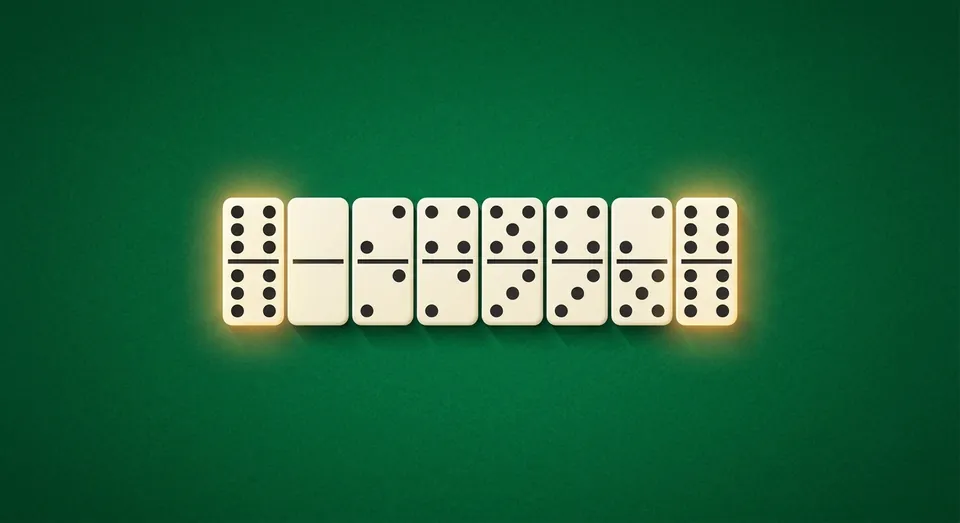
- Goal. Be the first to 15 points, scored by making the two open ends of the line match each other.
- The deal. Each player draws six tiles from the double-six set; the remaining sixteen form a generous boneyard.
- Scoring. When your play leaves both open ends showing the same value you score two points for a double-header - Or three for a triple-header, when one of the matching ends is a double.
- The boneyard. If you cannot play, draw from the boneyard until you can; you pass only when it is empty.
- Going out. Playing your last tile scores one point and ends the hand. If the line blocks, the lighter hand takes the point, and fresh hands are dealt until someone reaches 15.
Classic
Draw Dominoes
Double-six set (28 tiles) · The beginner's game · Roughly even vs the computer - Tile reading tips the balance
Draw Dominoes is the game most people learn first - The plain, friendly heart of the whole domino family. Each player takes seven tiles from the double-six set, the rest go face down into the boneyard, and you take turns adding tiles to either end of a growing line, matching pips to pips. Can't play? You draw from the boneyard until you can, which keeps the game moving and punishes a hand that runs out of options. The first player to place their last tile wins; if the line locks up with nobody able to play, the lighter hand takes it. Beneath the simple rules sits real judgment: which end to feed, which suits to keep covered, and when a forced trip to the boneyard tells you exactly what your opponent does not hold.
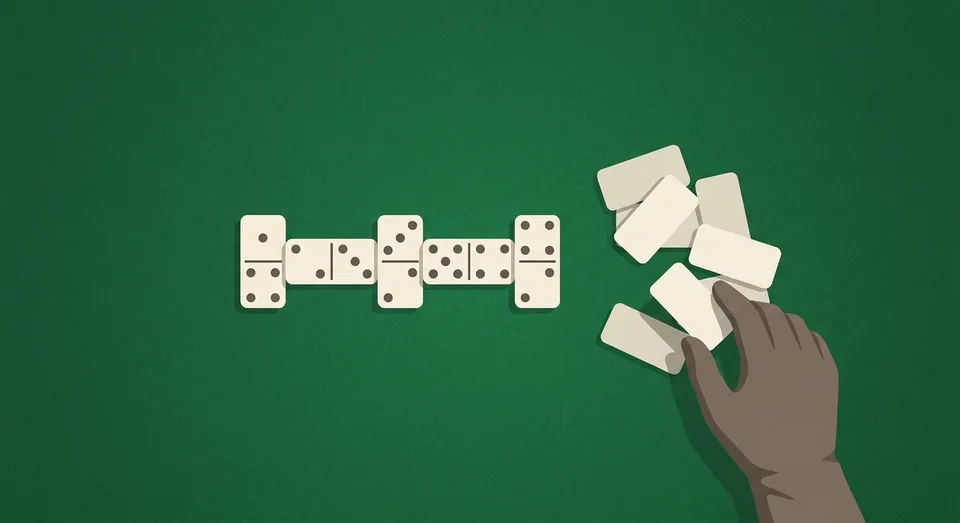
- Goal. Be the first to play every tile in your hand. Win the hand outright, or hold the lighter hand if the line blocks.
- The deal. Each player draws seven tiles from the shuffled double-six set of 28; the remaining fourteen go face down into the boneyard.
- Matching ends. The line grows at both ends. A tile may be played only where one of its halves matches the pip count of an open end - A 6-3 can join an open six or an open three.
- The boneyard. If you have no playable tile, draw from the boneyard until you find one. You may pass only when the boneyard is empty.
- Going out. The first player out of tiles wins. If neither player can move and the boneyard is gone, the hand is blocked and the lower pip count wins.
Block Dominoes
Double-six set (28 tiles) · Simple & pure · About 50/50 - Pip counting decides the blocked games
Block Dominoes strips the game to its purest form: seven tiles each, one line, and no boneyard rescue. If you cannot match either open end you simply pass, so every tile in your starting hand has to earn its place. The fourteen tiles left out of the deal stay face down and unseen, which makes deduction - Working out what your opponent can and cannot hold - The beating heart of the game. Hands end two ways: someone plays their last tile, or the line locks with both players stuck, and then the lower pip count wins. That second route is where Block is won and lost; strong players steer toward a block when their hand is light and force the game open when it is heavy. It is the standard game across the Caribbean and Latin America for good reason.
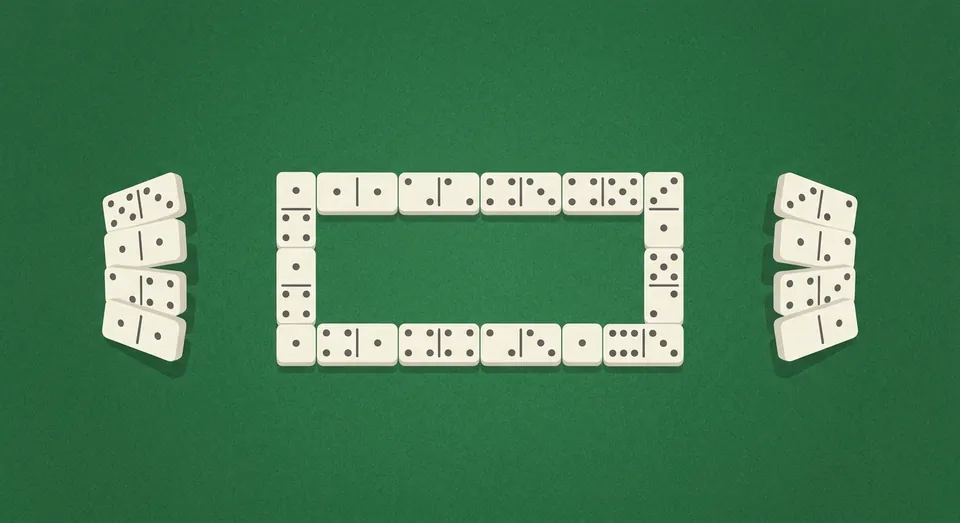
- Goal. Play all seven of your tiles first, or hold the lighter hand when the line locks - There is no boneyard to save you.
- The deal. Each player draws seven tiles from the double-six set; the other fourteen are set aside face down and never enter play.
- Matching ends. Tiles are added to either end of a single line, and the touching halves must match - Sixes on sixes, blanks on blanks.
- Doubles. Doubles are laid crosswise across the line for visibility, but they count as a single end of their number and open no new directions.
- Blocked games. If you cannot play, you pass. When both players are stuck the hand is blocked, both hands are turned up, and the lower pip count wins.
Twist Variants
Matador Dominoes
Double-six set (28 tiles) · Nothing matches - It adds · Even odds - Matador timing is everything
Matador turns the fundamental rule of dominoes on its head: instead of matching an open end, your tile's touching half must add to seven with it, so a 4 needs a 3, a 6 needs a 1, and nothing at all plays on a blank. Nothing, that is, except the four matadors - The 0-0, 1-6, 2-5 and 3-4 - Wild tiles that can be played on any end at any time, whichever way round you choose. Doubles lie flat in the line like any other tile, there is no spinner, and when you cannot play you draw from the boneyard. The hand is won by going out first, or by holding fewer pips when the line blocks. Because blank ends act as locks and matadors as the only keys, the whole game revolves around when to spend those four precious tiles.
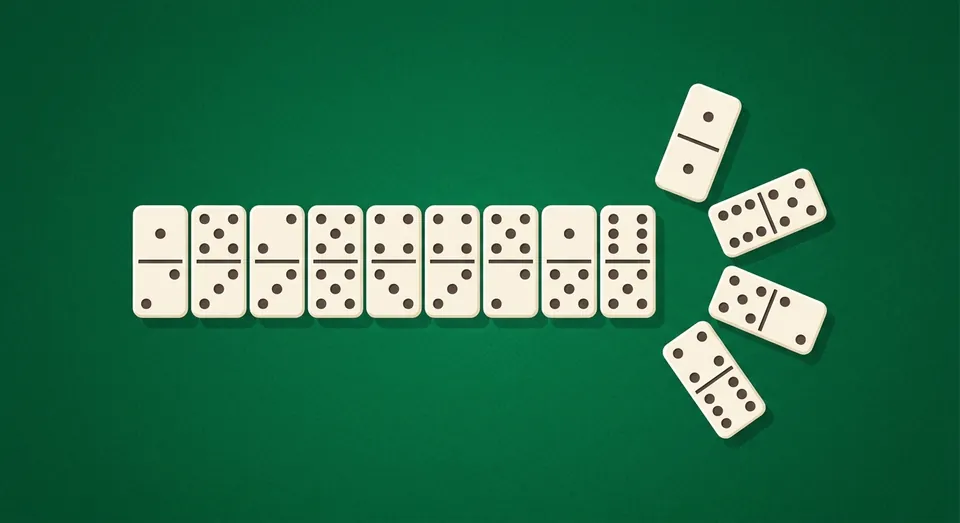
- Goal. Play out your hand first, or hold fewer pips when the line blocks - But here the touching ends must add to seven, not match.
- The deal. Each player draws seven tiles from the double-six set; the rest form the boneyard, drawn from whenever you cannot play.
- Ends that add to seven. A tile may be played only where its touching half and the open end sum to seven - A 3 plays on a 4, a 1 on a 6. No ordinary tile plays on a blank.
- The matadors. The 0-0, 1-6, 2-5 and 3-4 are matadors: wild tiles playable on any end at any time, with either half left facing out. They are the only tiles that can rescue a blank end.
- Doubles. Doubles lie inline like any other tile and expose only one half - There is no spinner and no crosswise play in Matador.
Cross Dominoes
Double-six set (28 tiles) · Four arms, more choices · Near 50/50 - Arm management separates players
Cross Dominoes opens with a ritual: the first tile must be a double, and the next four plays all attach to it, one on each side, building a cross at the centre of the table. From then on the layout has four open arms, and every turn offers up to four different ends to serve - Or to poison. Draw from the boneyard when you cannot play, and go out first or hold the lighter hand at a block to win. The extra arms sound like extra freedom, but they cut both ways: four ends means four suits to keep alive, and a player who lets one arm die on a number they cannot cover hands the initiative straight to their opponent. Cross is the natural next step after Draw, and the gateway to the whole family of multi-arm domino games.
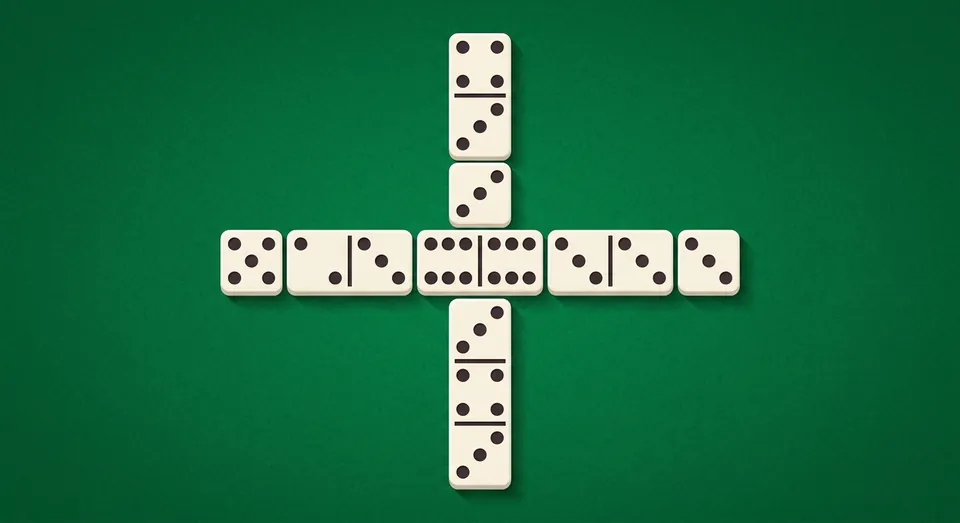
- Goal. Play out your hand first across a four-armed layout, or hold the lighter hand if the game blocks.
- The deal. Each player draws seven tiles from the double-six set; the rest form the boneyard. The opening play must be a double.
- The cross. The next four plays all attach to the opening double, one on each of its four sides. Only when the cross is complete does normal play resume.
- Matching ends. From then on tiles match end to end along all four arms, so every turn can offer up to four places to play.
- The boneyard. Cannot play on any arm? Draw from the boneyard until you can, and pass only once it is empty. First out - Or lighter at the block - Wins.
A few terms that apply everywhere
The line
The chain of played tiles on the table, growing outward as each player adds to it. Every game defines how the line may grow - matching ends, ends that add to seven, or arms branching from a spinner or cross.
Open ends
The playable ends of the line. Most games start with two; a spinner or cross can open up to four. In scoring games the pips showing on the open ends are the count you steer toward a multiple of five or three.
The boneyard
The face-down pool of undealt tiles. In draw games you dig into it whenever you cannot play; in Block it stays untouched. A fat boneyard means more unknowns - and more risk in every read of your opponent.
Doubles & the spinner
A double shows the same value on both ends and is laid crosswise to the line. In All Fives and All Threes the first double becomes the spinner, opening two extra arms once both sides of the main line are covered.
Ready to put the rules to work? Try today's Daily Challenge, race a friend in Multiplayer, or check the FAQ for common questions about dominoes in general.
Dominoes rules FAQ
How do you play dominoes?
In most dominoes games each player draws a hand of tiles from a shuffled, face-down boneyard, then takes turns adding tiles to a line of play by matching pips to an open end. In All Fives, the classic scoring game, you also earn points during play whenever the open ends add up to a multiple of five. The first player to empty their hand ends the round and collects points from the tiles the opponent still holds.
What is the goal of dominoes?
In blocking games like Draw and Block the goal is simply to be the first player to play every tile in your hand. In scoring games like All Fives and Fives and Threes you also score during play by steering the open ends of the line to certain totals, and the winner is the first to reach an agreed target such as 100 points.
Which dominoes game is the easiest to learn?
Draw Dominoes is the friendliest starting point - match an open end, draw from the boneyard when you are stuck, and go out first. Block is just as simple with passing instead of drawing, and All Fives adds only one scoring rule on top of the same matching play.
Which dominoes game is the hardest?
Fives and Threes and Matador are the trickiest common variants. Fives and Threes makes you track two divisors at once on the way to exactly 61 points, while Matador flips matching on its head - the open ends must add to seven, and four wild matador tiles reward careful timing.
How many dominoes do you start with?
With a double-six set and two players, most games deal 7 tiles each - All Fives, Draw and Block all start that way. Fives and Threes deals 9 tiles, Bergen deals 6, and the remaining tiles stay face down in the boneyard.
Want more answers? See the full dominoes FAQ or look up any term in the glossary. No set at home? The printable dominoes cut out into a full double-six set.