Play Dominoes
Classic All Fives, plus the one thing most dominoes sites lack: play a friend live in real-time multiplayer. No download, no signup.Dominoes.now is a free online dominoes site with 8 classic games - All Fives, Draw, Block and more - a shared daily challenge, and real-time multiplayer that lets you and a friend play the identical shuffle. There's nothing to download and no account required: just shuffle up and play below.
Other games worth playing
How to Play All Fives Dominoes
In a nutshell: The scoring classic - Make the open ends add up to multiples of five. You play with a double-six set (28 tiles), it's rated easy to learn, deep to master, and skill and pip counting shift the odds well past 50%.
All Fives is the most popular scoring variant of dominoes - The one tournament players often just call Muggins. You and your opponent each draw seven tiles from the double-six set, and any play that leaves the open ends totalling a multiple of five scores that total on the spot: 5, 10, 15 or even 20 points at once. The first double becomes the spinner, sprouting four arms once its main line is covered, which multiplies the ends you must count. Winning a hand pays too: go out first and you collect your opponent's leftover pips, rounded to the nearest five. Because points arrive from both the table and the hand, All Fives layers live arithmetic on top of the familiar matching game, and the running race to 100, 150 or 250 rewards players who can read the ends a full move ahead.
All Fives at a glance
| Goal | Be the first to the target score - 100, 150 or 250 points - Earned by making the open ends total a multiple of five and by winning hands. |
|---|---|
| Set used | Double-six - 28 tiles in play |
| Players | 2 - You vs the computer, or a friend online |
| Difficulty | Easy to learn, deep to master |
| Chance of winning | Skill and pip counting shift the odds well past 50% |
| Play modes | To 100, To 150, To 250 |
| Family | Scoring Games |
Step by step
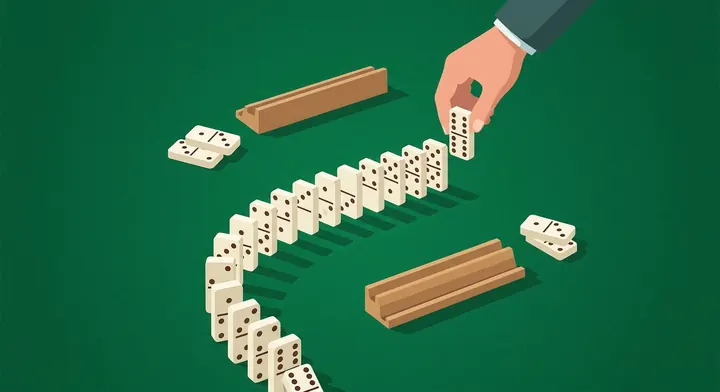
Goal
Be the first to the target score - 100, 150 or 250 points - Earned by making the open ends total a multiple of five and by winning hands.
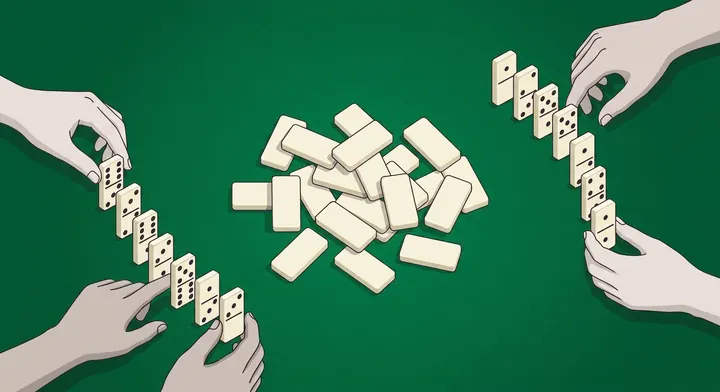
The deal
Each player draws seven tiles from the shuffled double-six set; the remaining fourteen form the boneyard. If you cannot play, draw until you can - You pass only once the boneyard is empty.
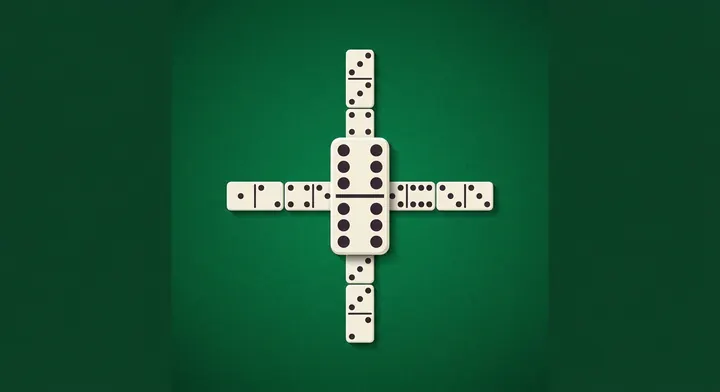
The spinner
The first double played is the spinner. Once both sides of the main line through it are covered, tiles may branch onto its two side arms, opening up to four scoring ends.
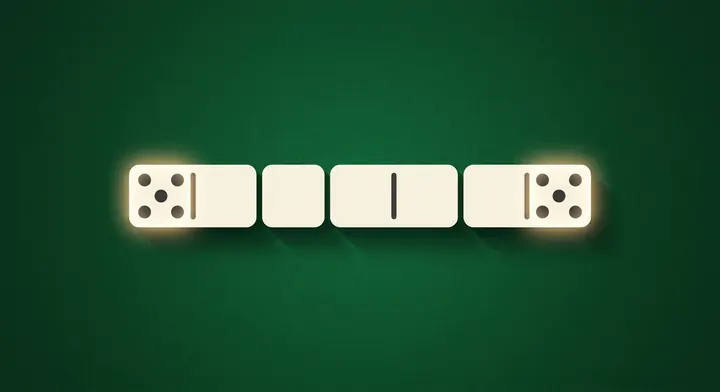
Scoring
After any play where the open ends total a multiple of five, you score that total. A double at an open end counts both halves, so the 5-5 contributes ten.
Going out
Play your last tile to win the hand and score your opponent's remaining pips rounded to the nearest five. If the game blocks, the lighter hand wins and scores the same way.
History of All Fives
Dominoes themselves long predate All Fives. Tile games with pip-marked bones were recorded in China around the Song dynasty, and the European set - Twenty-eight tiles including blanks, quite different from the Chinese arrangement - Appears in Italy and France in the eighteenth century before crossing to Britain. The word domino most likely comes from the black-and-white hooded costume of the same name, though the etymology is not certain.
All Fives belongs to the family of counting games that grew up in the English-speaking world during the nineteenth century, once players began scoring the layout itself rather than merely racing to go out. Victorian and early American game books describe Fives, Muggins and their relatives side by side, with the muggins rule - Claiming the points an inattentive opponent fails to call - Giving the game its most colorful name.
The game found particular favor in the United States, where its five-counting instincts fed directly into Texas 42, the domino trick-taking game said to have been invented by two Texas boys in 1887 to sidestep a prohibition on card playing. All Fives remains the standard scoring game in most modern collections, prized for adding a running arithmetic duel to the familiar chain of matching ends.
How to Win All Fives: Strategy
💡 Top tip: Count every end before you commit - The difference between a play that scores ten and one that scores nothing is often the same tile placed at the other end.
Winning tips, in order of importance
- Learn the natural scorers: the 5-5 and 6-4 open for ten, while the 5-0, 4-1 and 3-2 all open for five.
- When no score is available, play spoilers - Leave totals that need tiles you are holding, so the next score lands in your column.
- Cover the spinner's main line on your terms - Its side arms add scoring ends for both players, so open them when your hand is ready to cash in.
- Shed heavy tiles early; the 6-6 and 6-5 are big liabilities when your opponent goes out and rounds your pips to the nearest five.
- Watch every boneyard trip your opponent makes - A draw means they could cover neither end, which narrows their hand sharply.
- Keep a tile for each open end value late in the hand, so you are never forced to draw while your opponent scores freely.
Advanced tactics for All Fives
- Think in remainders: an end total of 13 needs a change of plus two or minus three to score, so scan your hand for tiles whose halves differ by exactly those amounts.
- A double at an open end counts twice, so the arithmetic swings hard - Playing the 5-5 onto an open five lifts that end's count from five to ten without touching the others.
- The first tile played on each spinner arm creates a brand-new open end; time those plays so the new value tips the total onto a multiple of five for you, not your opponent.
- In the endgame the rounding rule creates targets: forcing your opponent to hold 8 pips pays you 10 when you go out, while 7 pays only 5 - Half-tile margins matter.
- Before opening with the 5-5 or 6-4 for ten, check whether it hands your opponent an easy five-heavy reply; sometimes the quiet opening wins more across the hand.
- Keep count of the boneyard: only fourteen tiles start buried, so late in a hand you can often name your opponent's exact holdings from their draws and passes.
- Near the target score, play the hand differently: if fifteen points wins the game, hunt the single big score and stop worrying about pip liability.
Common All Fives mistakes to avoid
- Playing the spinner's arms before counting them - every arm you open changes the board total, so add up all the ends before you commit.
- Holding the 5-5 and 6-4 too long - the big scoring tiles are also the heaviest, and getting caught with 10 pips hands your opponent a rounded bonus.
- Chasing points while ignoring your exit - a hand that scores 15 early but strands three unplayable tiles usually loses the round.
- Forgetting the double counts both halves at an end - a 6-6 on the end adds 12, not 6, which turns many innocent-looking plays into multiples of five.
All Fives Variations
All Threes
The same machinery tuned to a different divisor: scores come when the open ends total a multiple of three, which changes every key tile and opening play while keeping the spinner and draw rules intact.
Fives and Threes
The British league game: points per five and per three in the end total, nine-tile hands, no spinner and a race to 61, traditionally pegged on a cribbage board.
Sniff
A popular American form of All Fives in which the first double - The sniff - May be joined on all four sides, with small rule differences around when the arms open and how the opening tile scores.
Texas 42
Not a layout game at all but a domino trick-taking game built on the same five-counting instincts - Invented in Texas, where it became a state institution, and the natural next step for All Fives players.
Double-nine All Fives
Playing with a 55-tile double-nine set adds bigger ends and wilder totals - Scores of 25 and 30 come into reach - And suits larger groups, though the double-six game remains the classic.
All Fives FAQ
How do you score points in All Fives?
After any tile you play, add up all the open ends of the layout. If the total is a multiple of five - 5, 10, 15 or 20 - You score that many points immediately. Points also come from winning the hand, when you collect your opponent's leftover pips rounded to the nearest five.
What does the spinner count in All Fives?
While the spinner double sits at an open end it counts both halves, so the 5-5 contributes ten to the total. Once both sides of the main line through it are covered it stops counting, and each tile later played on its side arms creates a new open end of its own.
Why is it called Muggins?
In traditional play, a player who fails to notice their own score can be caught out: the opponent calls 'Muggins!' and claims the missed points. The name - An old British word for a fool - Stuck to the game itself, and All Fives, Muggins and Fives Up are all names for essentially the same rules.
What is the best opening tile in All Fives?
The 5-5 and the 6-4 both open with ends totalling ten, the biggest first-move score available. If you hold neither, the 5-0, 4-1 and 3-2 all open for five. Opening with a heavy tile that scores nothing is usually the worst of both worlds.
What happens if I can't play in All Fives?
You draw from the boneyard until you find a playable tile. Only when the boneyard is empty may you pass. Forced draws are costly twice over: they add pips to your hand and tell your opponent which end values you lacked.
How does a hand of All Fives end?
Either a player goes out by placing their last tile, or the game blocks with neither player able to move and the boneyard empty. The player who goes out - Or holds fewer pips at a block - Wins the hand and scores the opponent's remaining pips rounded to the nearest five.
How does rounding to the nearest five work?
The pips left in the loser's hand are rounded to the closest multiple of five: 8 pips become 10, 7 pips become 5, and 12 become 10. It keeps every score on the five-point scale the game is built around, which is also why All Fives pegs so neatly on a cribbage board.
Does a double at an open end really count both halves?
Yes. A double sitting at an open end contributes both its halves to the count, so the 6-6 adds twelve and the 5-5 adds ten. This rule is what makes doubles the biggest swing tiles in the game, able to turn a dead total into a large score in one play.
How many points do you play to in All Fives?
Common targets are 100, 150 and 250, and our game offers all three modes. Shorter races reward hot streaks and big single hands, while a race to 250 gives skill and steady pip counting more time to tell.
Is All Fives a game of luck or skill?
There is real luck in the draw, but far less than in simple Block or Draw dominoes. Because points flow from arithmetic on the open ends, a player who counts ends, tracks suits and manages the spinner will beat a casual player over any reasonable series of hands.
How many tiles are used in All Fives?
The standard game uses a double-six set of 28 tiles. Each player draws seven and the remaining fourteen form the boneyard. Larger sets such as double-nine can be used for a wilder scoring game, but double-six is the classic.
What is the difference between All Fives and Fives and Threes?
All Fives scores the full total of the open ends when it divides by five, uses a spinner, and pays pips for winning hands. Fives and Threes scores points per division - One per five and one per three - With no spinner, nine-tile hands and a race to 61. They feel related but reward different tiles.
Still have a question about All Fives Dominoes? Browse the full dominoes FAQ, look up a term like scoring games or easy to learn, deep to master in the dominoes glossary, or compare All Fives with the other games in the rules for every dominoes game.
Last updated .
More Dominoes Games
Why Dominoes.now?
Dominoes.now is built for people who actually play: instant shuffles, tap-to-place tiles, unlimited undo, smart hints, automatic scoring, and per-game statistics that live in your browser. Every classic is here - Draw, Block, Fives and Threes, Bergen and more - Plus something almost no dominoes site has: real online multiplayer, where you and a friend play the exact same shuffle on different devices, turn by turn. Browse the full list of free dominoes games, or check the dominoes FAQ if you're new to the game.
Want to sharpen your game first? Start with the rules for every dominoes game, brush up on terms like spinner and boneyard in the dominoes glossary, or print a real set from our printable dominoes page.
Common questions about Dominoes.now
Is Dominoes.now free?
Yes. All 8 dominoes games, the daily challenge, the leaderboard and online multiplayer are completely free to play in your browser, with no download and no signup. An optional free sign-in only adds cross-device stats.
Do I need to download or install anything?
No. Dominoes.now runs entirely in your web browser on desktop, tablet and phone. You can add it to your home screen so it opens like an app, but there is nothing to install and nothing to update.
Is Dominoes.now safe to use?
Yes. There are no ads chasing you around the page and no personal data is needed to play. Your stats are stored in your own browser, not on a server, unless you choose the optional Google sign-in to sync them across devices.
What makes Dominoes.now different from other dominoes sites?
Real-time online multiplayer: you and a friend play live on the identical shuffle, in a private room you share with a 6-letter code. Around that sit 8 classic variants - from All Fives to Matador - each with full rules and strategy guides.
Who made Dominoes.now?
Dominoes.now is built by a small team of dominoes fans who also run several sister game sites. Questions, bug reports and rule debates are all welcome through the contact page.
Types of Dominoes
"Dominoes" isn't a single game - It's a whole family of tile games played with the same 28-piece double-six set. Dozens of variants exist, but almost all of them fall into a handful of mechanical categories that determine how the game actually feels to play. The most popular group online is the scoring games, where you earn points during play by steering the open ends of the line to certain totals - All Fives, the game most parlors simply call "dominoes," is the archetype. A second group is the classic blocking games, Draw and Block, where nothing matters but going out first: you match ends, shed tiles, and try to strand your opponent with a heavy hand. A third, smaller but beloved group is the twist variants like Matador, where the familiar matching rule is replaced by something stranger - Ends that must add to seven, pairs that pay in Bergen, or a cross-shaped layout with four arms. Games also differ by how many tiles you draw, whether a spinner opens extra arms, and whether a blocked line ends the hand or just changes it. Understanding which category a game belongs to tells you almost immediately whether it will be a quick matching race, a running arithmetic duel, or a single tense hand that turns on one wild tile.
Scoring Games
Scoring games are where dominoes earns its reputation as a mental-math duel. You still match tiles end to end, but every play can pay: leave the open ends at the right total and the points are yours on the spot. They range from the spinner-driven counts of All Fives to the exact-61 finish line of Fives and Threes.
- All Fives Dominoes - The scoring classic - Make the open ends add up to multiples of five. All Fives is the most popular scoring variant of dominoes - The one tournament players often just call Muggins. (Easy to learn, deep to master, Double-six set.)
- All Threes Dominoes - All Fives' sibling - Score when the open ends add up to multiples of three. All Threes takes the machinery of All Fives and retunes it: every play that leaves the open ends totalling a multiple of three scores that many points, so 3, 6, 9, 12 and beyond all pay. (A familiar twist, Double-six set.)
- Fives and Threes - The British pub game - Score for fives AND threes, race exactly to 61. Fives and Threes is the great British pub game - The variant played in leagues across northern England, traditionally scored on a cribbage board. (The pub classic, Double-six set.)
- Bergen Dominoes - Score by making both open ends match - Two points a pair, three with a double. Bergen is the gentlest of the scoring domino games, and one of the most elegant. (Gentle & tactical, Double-six set.)
Classic
The classics are the games most people picture when they hear "dominoes" - The pure matching games that every other variant is built on. No counts, no spinners: just match the open ends, go out first, and leave your opponent holding the heavy tiles.
- Draw Dominoes - The classic starter - Match ends, draw from the boneyard when stuck, first out wins. Draw Dominoes is the game most people learn first - The plain, friendly heart of the whole domino family. (The beginner's game, Double-six set.)
- Block Dominoes - No boneyard rescue - Pass when stuck and win the count when the line locks. Block Dominoes strips the game to its purest form: seven tiles each, one line, and no boneyard rescue. (Simple & pure, Double-six set.)
Twist Variants
Twist variants bend one core rule and change the whole game. Matador makes the ends add to seven instead of matching, Bergen pays for pairs rather than counts, and Cross forces the layout into four arms before it opens up. Small rule changes, completely different reads.
- Matador Dominoes - Forget matching - Adjacent ends must add to seven, and matadors are wild. Matador turns the fundamental rule of dominoes on its head: instead of matching an open end, your tile's touching half must add to seven with it, so a 4 needs a 3, a 6 needs a 1, and nothing at all plays on a blank. (Nothing matches - It adds, Double-six set.)
- Cross Dominoes - Open with a double, build a cross, then race along four open arms. Cross Dominoes opens with a ritual: the first tile must be a double, and the next four plays all attach to it, one on each side, building a cross at the centre of the table. (Four arms, more choices, Double-six set.)
Which dominoes game should I play?
Not sure where to start? Match the game to your mood:
New to dominoes
Begin with Draw, or keep it even simpler with Block. Both are pure matching games - No counts to track - And they teach the line, the open ends, and the boneyard in a single hand.
Love the mental math
Play All Fives. Every play can score if the open ends land on a multiple of five, so you are counting the board from the first tile - The thinking person's dominoes, with All Threes as its threes-based twin.
A quick single hand
Reach for a one-hand game: Matador or Cross. No running score across hands, no long setup - One deal decides everything, and each plays in minutes.
The hardest challenge
If you want to be tested, try Fives and Threes or Bergen - The first demands you track two divisors at once on the way to exactly 61, the second rewards pair-making reads most players never see coming.
Play with a friend
Dominoes was never meant to be solitary. Jump into online multiplayer and race someone head-to-head on the exact same deal, live.
Ready to dig deeper? Our complete rules hub explains every game above in full - Goals, legal plays, scoring and strategy - And if you'd rather test your skills against everyone else, take on today's daily challenge, a single shared deal that resets at midnight UTC.